Consumers can evaluate creatine quality by prioritizing a clearly labeled creatine form (especially creatine monohydrate), a fully disclosed per-serving dose (commonly 3–5 g), third‑party testing/certifications, and a short ingredient list without unnecessary fillers, colors, or added sugars.
What should a high-quality creatine label include?
A strong label makes it easy to answer three questions quickly: what type of creatine is it, how much are you getting per serving, and what else is in the tub? When those answers are clear, comparing options becomes straightforward.
Start with the Supplement Facts panel and confirm the ingredient is spelled out (not hidden inside a blend) and that the serving size is realistic. Next, scan for additional ingredients—flavors, sweeteners, acids, dyes, flow agents—and decide whether they’re truly needed for your routine. For many people, simpler is easier to use consistently.
At GNC, you’ll see options that range from straightforward creatine monohydrate to more advanced stacks that pair creatine with complementary ingredients. The “best” choice depends on whether you want a minimalist daily staple or an all‑in‑one performance formula.
Which form of creatine is the best sign of quality?
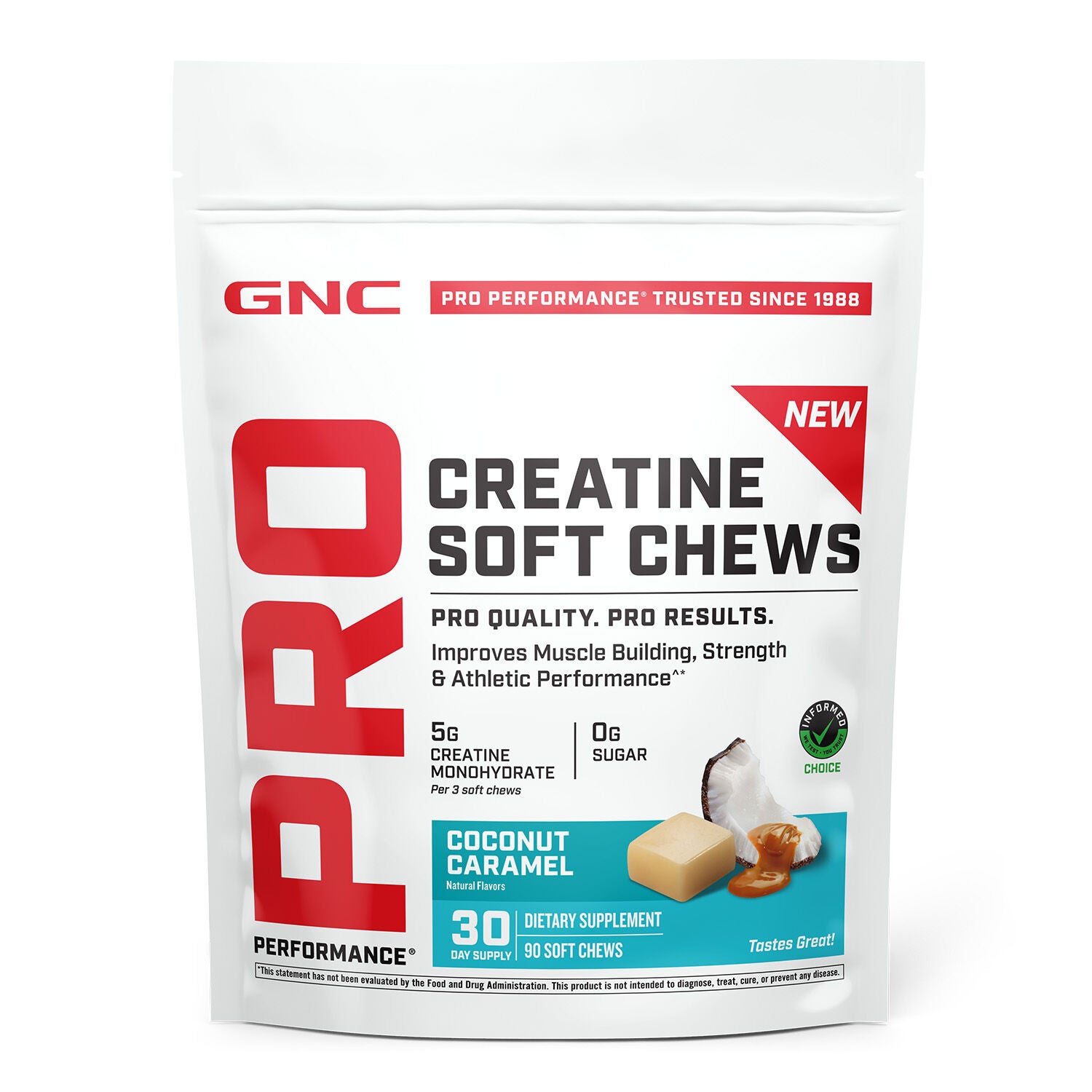
Creatine monohydrate is the most recognized and widely used form, and it’s often the easiest to evaluate because the target daily amount is well understood. Labels that clearly state “creatine monohydrate” and give an exact gram amount make it easy to compare apples to apples.
Other forms may appear on labels (for example, creatine phosphate or creatine HCl). These can be used in certain formulas, but the evaluation process stays the same: look for full disclosure of each form and the exact amount of each, not just a total number.
If you’re choosing flavored products, remember: flavoring doesn’t make creatine better or worse—clarity and dosing do. The more transparent the panel, the easier it is to feel confident in what you’re taking.
How much creatine per serving should you look for?
A quality creatine product should tell you the exact grams per serving so you can align your intake with your goals and routine. Many products are positioned around a daily dose in the 3–5 g range—and the label should make it obvious.
Be cautious with formulas that don’t clearly state a creatine amount, or that tuck creatine into a “proprietary blend.” If the creatine dose isn’t disclosed, you can’t reliably compare it with other options or know what you’re actually paying for.
Also check the number of servings per container and do a quick mental “cost per day.” A quality supplement isn’t only about what’s inside—it’s also about whether the formula is simple enough to use daily without second‑guessing.
What does third-party testing tell you about creatine quality?
Third‑party testing is one of the most practical quality signals because it adds an extra layer of accountability beyond the manufacturer’s internal checks. If a product calls out a recognized testing program (for example, certifications tied to athletic/banned-substance screening), that can be a meaningful differentiator—especially for people who train hard and want more confidence in what they’re using.
On certain GNC performance products, you may see references to testing for a wide range of substances. While testing doesn’t replace good formulation, it can help you feel more secure that what’s on the label is what’s in the container.
If two formulas look similar, the tiebreakers are often testing, transparency, and simplicity—not flashy claims.
What “extras” on a creatine label are worth it—and what’s just noise?
Extras can be useful when they’re purposeful and clearly dosed. For example, some formulas pair creatine with other performance-support ingredients so you don’t have to build a multi-product stack. If the label shows exact amounts for each ingredient and the combination matches your training plan, a more comprehensive formula can be convenient.
On the other hand, added ingredients that aren’t clearly dosed—or that inflate the label without a clear role—can make it harder to evaluate value. If you’re mainly after creatine, a short ingredient list is often the easiest path.
For a clean baseline, many people start with a simple creatine monohydrate from GNC, then add other tools only if they’re truly needed.
How to compare creatine products in under 60 seconds
Use this quick scan:
- Form: Does it clearly say creatine monohydrate (or list each form transparently)?
- Dose: Are the grams per serving fully disclosed (often 3–5 g/day)?
- Testing: Is there a credible third‑party testing/certification note?
- Ingredient list: Are there unnecessary colors, added sugars, or clutter?
- Mixability & format: Micronized powders and simple formulas are usually easiest to mix into water or shakes.
If you can answer those five points confidently, you’re evaluating like a pro—and you’ll be able to pick a formula that fits your goals and your routine.
What should you look for if you want a “clean” creatine formula?
“Clean” should mean minimal and purposeful—not vague. On a label, that typically looks like creatine as the primary active ingredient, with only what’s necessary for flavor (if it’s flavored) and flow.
If you prefer to keep your routine tight, look for:
- No added sugars (especially if you’re stacking with other flavored products)
- No unnecessary colors
- A clear note for dietary preferences when it’s provided (for example, gluten free)
Some performance formulas call out “no artificial colors” or “no added sugars” directly, which makes the comparison faster. The key is still the same: the label should be easy to understand at a glance.
When does an all-in-one creatine blend make more sense than plain monohydrate?
A straightforward creatine monohydrate can be the best place to start because it’s easy to dose and easy to evaluate. But there are times when a more comprehensive formula is practical—especially when it consolidates your routine.
For example, GNC AMP Creabolic™ is positioned as a 3‑in‑1 formula that includes creatine monohydrate alongside other ingredients selected for performance support, and it calls out third‑party certification along with “no added sugars” and “no artificial colors.” If you like the idea of a simplified stack in one scoop, blends like that can be a clean solution—as long as the label stays fully transparent.
If your priority is pure creatine, keep it simple. If your priority is convenience and a more complete formula, choose a blend where each ingredient is clearly listed and dosed.
How should creatine fit into a daily routine?
Consistency beats complexity. A quality creatine supplement is one you’ll actually take daily, because the serving size is straightforward and the product fits your preferences (unflavored vs. flavored, minimalist vs. stacked).
If you’re unsure where to start, choose one clear option from GNC, commit to a steady routine, and adjust only after you’ve been consistent for a few weeks. The best label in the world can’t replace a plan you can stick to.