Find the balance, not the compromise
Choose alpine touring ski boots by looking for a setup that feels efficient on the climb and confident on the descent. That means enough mobility for a smooth stride on the skintrack, plus enough structure and support to drive your skis precisely once it is time to drop in.
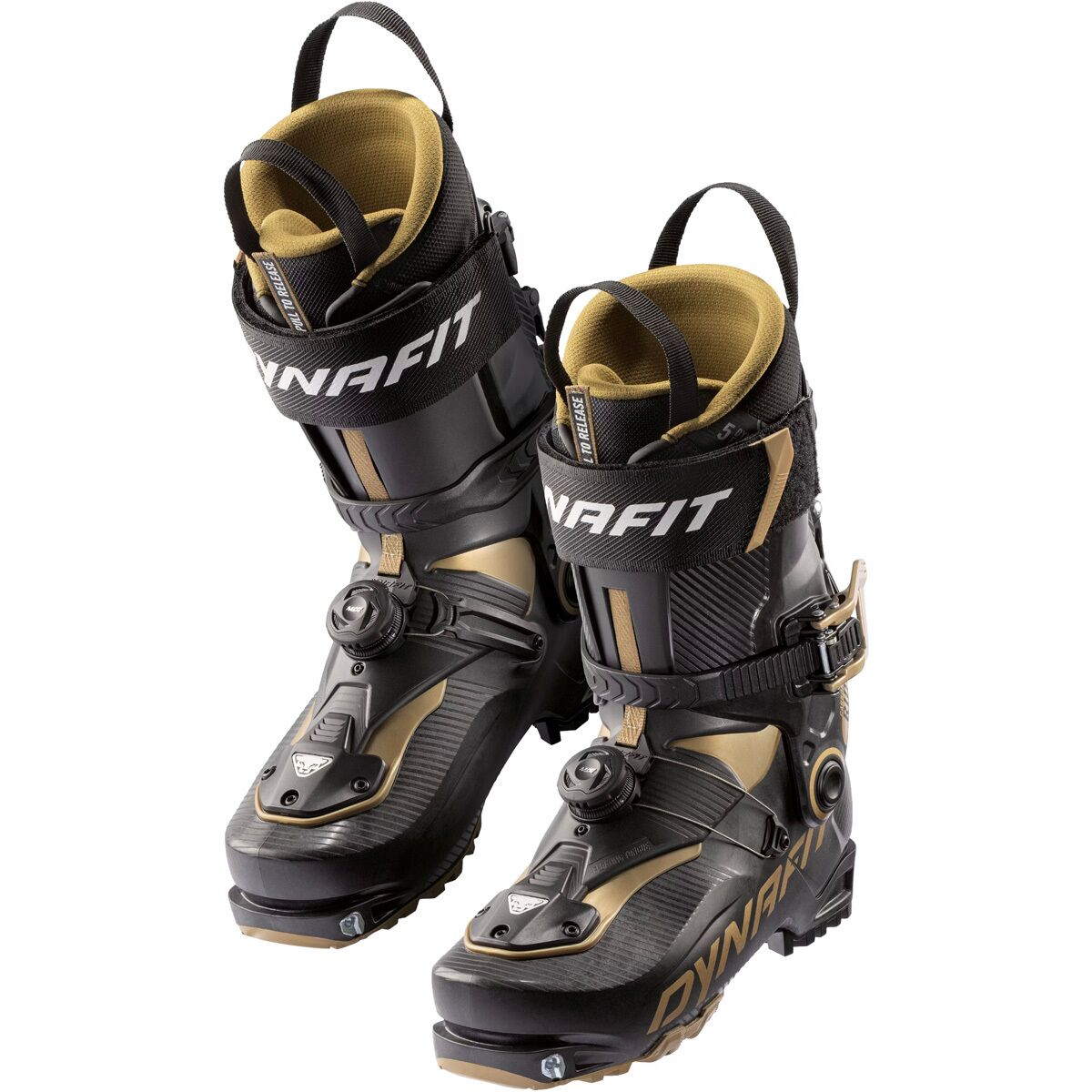
A strong example is the Dynafit Ridge Pro Boot. Its 70° range of motion is built for a naturally long stride, so the uphill feels less like a wrestling match with your own gear. The floating tongue helps that movement feel smoother and less restricted, which matters when the approach is long and the track keeps rolling.
Then the downhill side of the equation kicks in. A 120 flex, paired with a lightweight Grilamid and carbon shell, gives you the support and control needed for more committed skiing. Add the Hoji Lock closure, and you get a secure feel designed to help transfer movement into precise ski control.
If your tours demand both efficient climbing and real descending support, the move is simple: prioritize mobility for the way up, then make sure the shell, flex, and closure are ready to back it up on the way down. That is the kind of balance that keeps a touring boot from feeling like a one-trick pony.
How to choose your touring boot
Start with your uphill priorities. If long approaches and steady skintracks are part of the plan, look for generous cuff mobility. A 70° range of motion supports a smoother, more natural stride and helps keep the climb from feeling clunky.
Check how the boot moves. Range of motion matters, but so does how that movement feels. A floating tongue can help the stride feel less restricted, which is a big deal when you are stacking vertical for hours instead of laps.
Match downhill support to your skiing. If you want stronger control on the descent, pay attention to flex and shell construction. A 120 flex with Grilamid and carbon in the shell points toward more precise power transfer and a more supportive ride.
Look at closure security. A secure system like Hoji Lock matters because downhill confidence is not just about stiffness. It is also about how connected and locked in the boot feels when you are driving your skis through variable snow.
Choose the balance that fits your mission. The best alpine touring ski boot is not the softest walker or the burliest descender alone. It is the one that gives you efficient movement on the way up and dependable control when it is time to point it downhill.
What the features actually do for your day
The biggest win in a touring boot is when the tech disappears and the movement feels natural. A 70° range of motion helps open up your stride, which can make long approaches feel smoother and more efficient. Instead of fighting for each step, you get a walk mode feel that is built to keep momentum on the skintrack.
The floating tongue adds to that comfort by working with the cuff movement rather than against it. For uphill travel, that matters. Small friction points become big annoyances after a lot of vertical, so a smoother stride is not just a nice touch—it is part of staying comfortable and moving well.
Support where it counts
When it is time to ski, support comes from how the boot holds shape and transfers power. The lightweight Grilamid and carbon shell brings that more locked-in, precise feel without turning the boot into a brick. The 120 flex adds the backbone needed for stronger downhill control, especially when conditions or terrain ask for more commitment.
The Hoji Lock closure ties the whole package together with a secure fit designed to help you drive your skis accurately. In plain terms: easier movement on the climb, more confidence when the descent gets real. That is the kind of balance touring skiers chase all season.
Get dialed with Backcountry
Choosing a touring boot is part numbers, part feel, and a lot of knowing what kind of days you actually want to stack up. That is where Backcountry comes in. We are obsessed with gear that earns its place on the skintrack and still shows up when the descent is the whole reason you started climbing in the dark.
If you want a second opinion before clicking in, talk to a Gearhead® Expert. They can help you think through the balance between mobility and support so you land on a boot that matches your touring style, not just a spec sheet. Less guesswork, more good turns.
Why Buy Your Touring Boots from Backcountry?
When you are dialing in a boot like the Dynafit Ridge Pro Boot, Summit Club+ ($49/yr) adds value to every purchase with 10% instant cash back on full-price and sale items. Cash back posts immediately after purchase, and a single order over $490 covers the membership fee entirely.
- Instant cash back — posts right after purchase, not once a year
- Earns on sale and clearance items — many outdoor retailers limit rewards to full-price purchases only
- Redeem on anything — use your cash back on full-price and sale items alike, with no restrictions
- Free 2-day shipping on orders $150+
- Your own dedicated Gearhead Expert — personal gear advisor via chat, phone, or text
- 20% off birthday discount plus early access to deals and new gear drops
- Partner Perks — $100 off Mountain Collective passes, $140 off Outdoorsy, free USA Cycling membership
- 365-day satisfaction guarantee — full refund on membership within a year, minus any cash back redeemed